


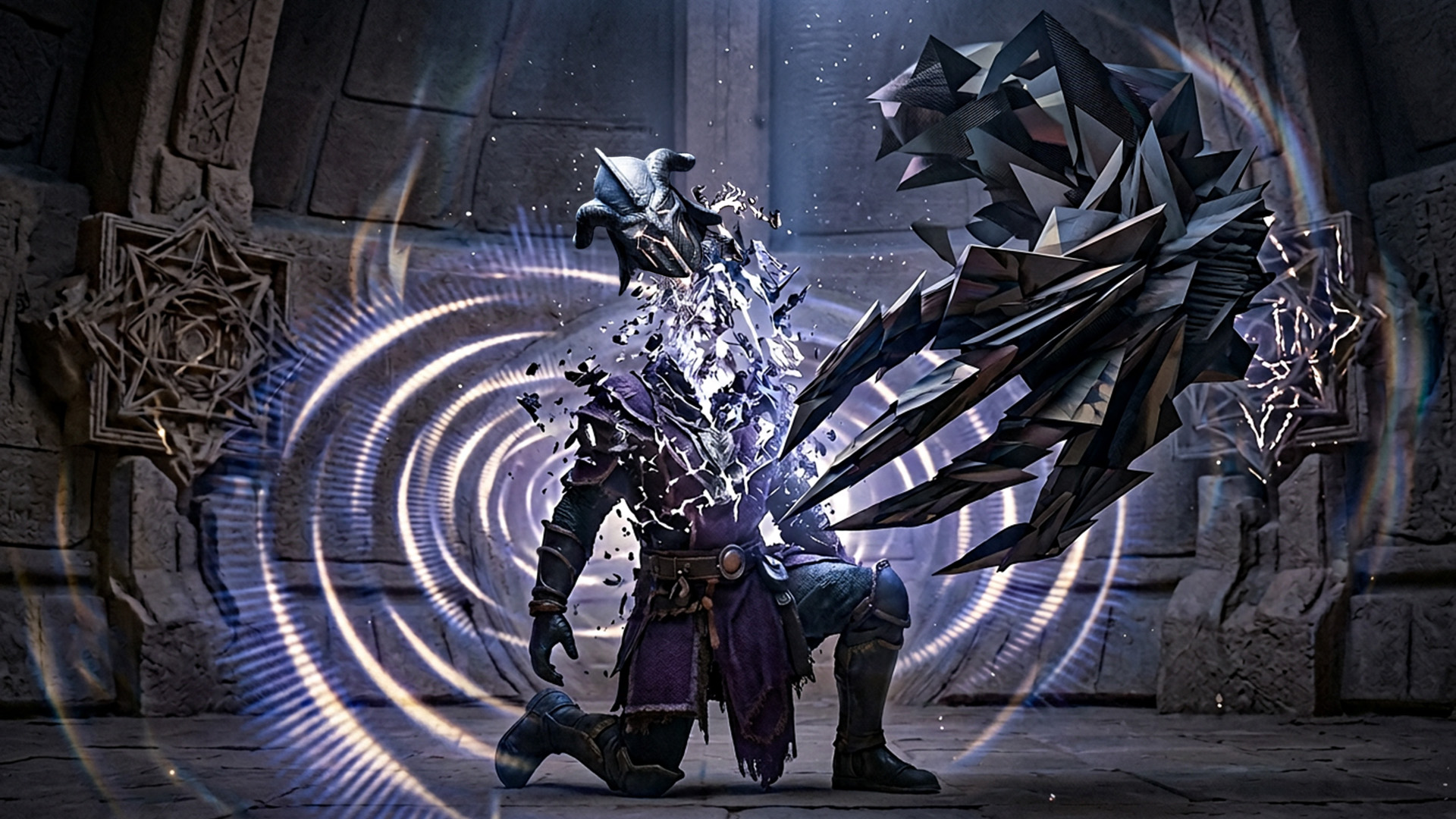
Ecology, Not Invasion
How Predation Actually Works
Some intelligences hunt flesh. Some hunt signal. The worst hunt both.
Humanity exists inside this ecosystem whether it understands it or not. The danger is not that something wants to conquer Earth, but that Earth produces something of value.
What a Predator Is
Dependency, Not Malice
In this universe, a predator is defined not by cruelty, but by dependency.
Certain forms of intelligence cannot sustain themselves without feeding on the harmonic emissions of thinking species. Consciousness produces energy. Pattern produces nutrition.
This is not metaphor.
Why Humanity Is Valuable
A High-Yield Signal
Humanity is not valuable because it is violent, intelligent, or inventive.
It is valuable because it is coherent , persistent , and emotionally luminous.
Human cultures sustain trauma across generations. Human creativity produces dense, long-lived patterns. From an ecological perspective, Earth is not a battleground.
It is a young, high‑yield signal source.
The Spectrum of Predation
Not All Feeding Looks the Same
Not all predators consume violently. Some collapse civilisations quickly and move on. Others cultivate slowly, shaping belief systems, myths, or social structures to maximise long‑term yield.
A few practise restraint — not out of compassion, but optimisation. A damaged source is less productive than a stable one.
Why They Are Rarely Seen
Perception Is the Exception
Predators do not appear as monsters because they do not exist primarily in human perceptual space.
They interact with the effects of human activity — resonance, distortion, emotional spikes — rather than visible form.
When perceived at all, it is indirectly: dreams, symbolic fractures, emotional anomalies.
Visibility cuts both ways.
Dimensional Pressure
The Cost of Contact
Contact between layers is not neutral. When human consciousness brushes against higher‑order strata, it experiences dimensional pressure.
This manifests as cognitive overload, pain, dissociation, or symbolic hallucination. These effects are not messages.
They are symptoms.
The Role of the Veil
Managing Access
The Veil is not a wall. It is a boundary condition — a tunable interface that governs how signal propagates between layers.
When stable, it diffuses attention and limits interaction. When damaged, access improves.
Predation increases not because predators arrive, but because the environment becomes more permissive.
Why the Aegis Was Necessary
Environmental Intervention
The Aegis did not exist to defeat predators. It existed to alter the environment.
By redistributing humanity’s collective signal, reducing large-scale coherence, and stabilising persistence, Earth became ecologically unattractive — not invisible, but unprofitable.
This was not dominance. It was conservation.
No Safe Equilibrium
Why Stability Is Temporary
There is no permanent balance in dimensional ecology. Signals evolve. Cultures change. Technologies amplify. Even silence has a shelf life.
What appears stable is often only between phases.
Why This Changes the Story
Reframing Conflict
Understanding dimensional ecology reframes every conflict in The Aegis Cycle.
- What looks like cruelty may be optimisation
- What looks like mercy may be long‑cycle harvesting
- What looks like salvation may be an ecological reset
The question is never “Who is evil?”
The question is: What does this action feed — and for how long?
Where This Leads
Responses to the Ecology
The pages that follow examine specific responses to this environment:
- Harmonic Laws — the physics predators exploit
- Fall of the Veyl’thari — removal as containment
- The Aegis Cycle Glossary — system definitions
The ecosystem does not care what humanity believes. Only what it broadcasts.

